The choice Vilar made
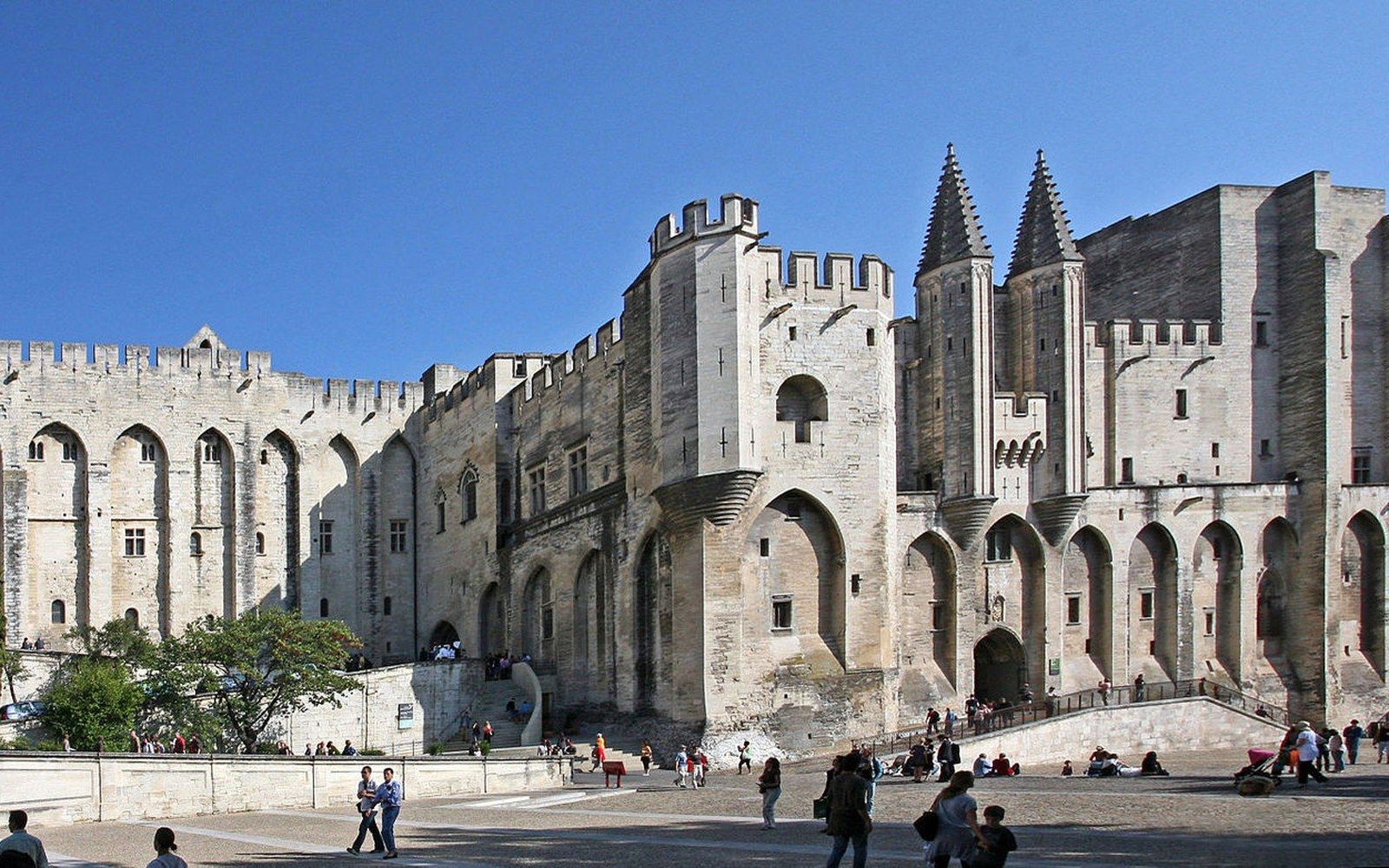
In the summer of 1947, Jean Vilar brought theatre into the Cour d'honneur of the Palais des Papes in Avignon — a fourteenth-century papal palace whose vast courtyard had never been designed as a performance space. It was an act of deliberate provocation against the idea that theatre belonged indoors, behind a proscenium, in a city that could afford one.
The Cour d'honneur is not a theatre. It is a court: roughly rectangular, open to the sky, enclosed on its north side by the Grand Tinel facade of the palace and flanked by stone walls that rise to roughly thirty metres.
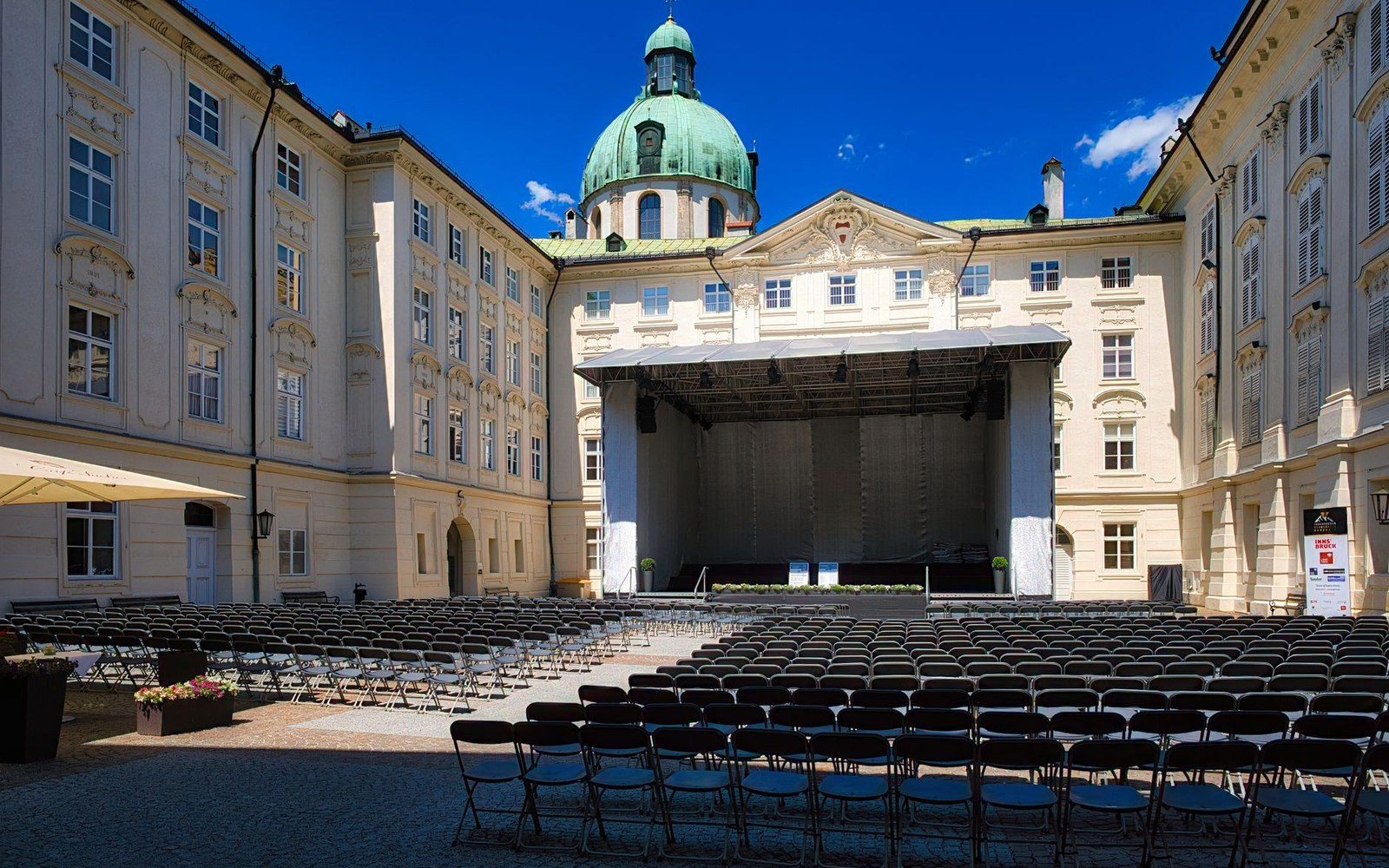
The stage Vilar erected sat against that northern wall, using the sheer cliff of dressed limestone as its back surface — a scaenae frons by accident of history rather than Roman design. The facade returns early reflections to the audience and gives outdoor speech a body it would otherwise lack. What no Roman architect planned, Vilar understood intuitively: the wall was doing acoustic work.
What the room gives and takes
The courtyard holds somewhere around two thousand people seated on temporary raked platforms built fresh every season. Because there is no roof, the sky above absorbs almost everything that travels upward; reverberation time is short, and the sound that survives is the direct path and the first bounce off the palace face.
In a conventional hall this would feel dry. In the Cour d'honneur it produces an intense, exposed clarity — every word travels unaided or not at all, and silence, when Vilar used it, was genuinely silent. This was the setting for the Festival d'Avignon, which Vilar founded and led until his death in 1971.
The openness imposes its own discipline. The mistral — the cold north-westerly that drives down the Rhône valley — can arrive in the middle of a performance and strip a scene of all its atmosphere. Ambient sound from the city drifts in.
A plane crossing overhead becomes a dramaturgical event. Directors who have worked the Cour d'honneur describe learning to programme with these intrusions rather than against them: the outdoor world is never fully excluded, and the work that survives there tends to be robust rather than fragile.
The logistics of the courtyard
Rigging in the Cour d'honneur is constrained by the palace itself, which is a classified historic monument under French law — and stonemasons working a protected site know that nothing may be fixed into the fabric without conservation review.
Every structural element of the stage and the lighting grid stands free, bearing its own load. The flying possibilities a conventional stage house would provide simply do not exist here, which shapes the visual language of every production: design leans toward the elemental, because there is nowhere to hide the complicated.
The get-out after the final performance is a substantial operation. The temporary seating, the power infrastructure, the lighting rigs and the stage itself all leave the court before the palace resumes its ordinary institutional life. A site that takes weeks to build is struck in a matter of nights.
Acoustic conditions
- Reverberation time
- short; open sky absorbs upward-travelling sound, leaving direct path and first reflection off the palace face dominant
- Early reflection
- the north facade of the Palais des Papes returns the performer's voice toward the audience, functioning as an accidental scaenae frons
- Silence
- genuinely present in outdoor conditions; no background reverberation masks it
The long shadow
What Vilar proved in that courtyard — with productions of Shakespeare and Kleist, and actors including Gérard Philipe, who became closely identified with the festival's early years — was that a medieval wall and an open sky constituted a theatre if a company decided they did. The idea spread.
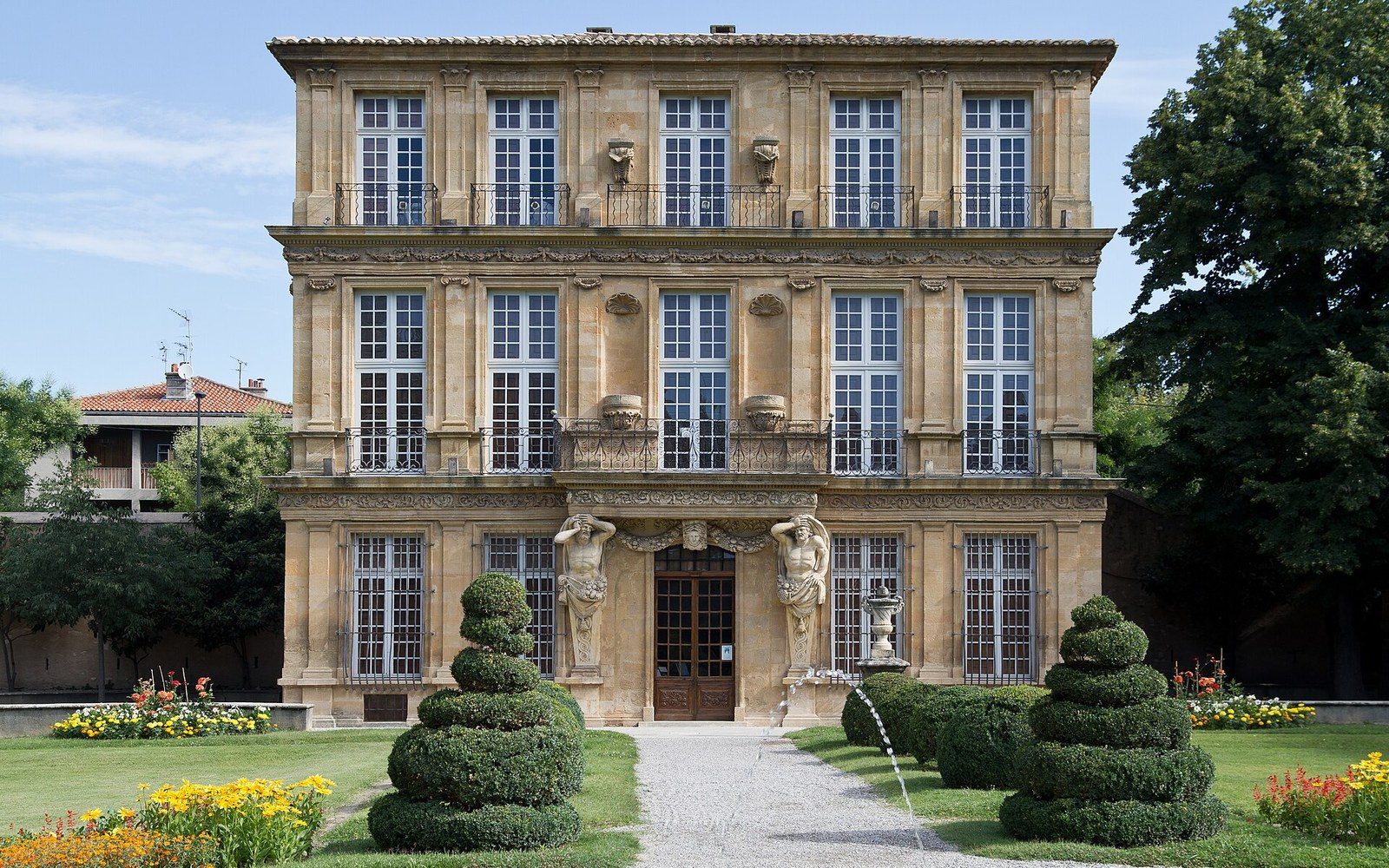
Festival d'Aix-en-Provence, which Gabriel Dussurget founded the following year in 1948, made a comparable choice with the Cour de l'Archevêché: a different enclosure, a different acoustic, the same argument that the right room was the one that existed, not the one that might be built. Avignon came first, and its logic — that a hard facade and a shared sky are enough — still governs how France understands the festival form.
In the Cour d'honneur it produces an intense, exposed clarity — every word travels unaided or not at all, and silence, when Vilar used it, was genuinely silent.