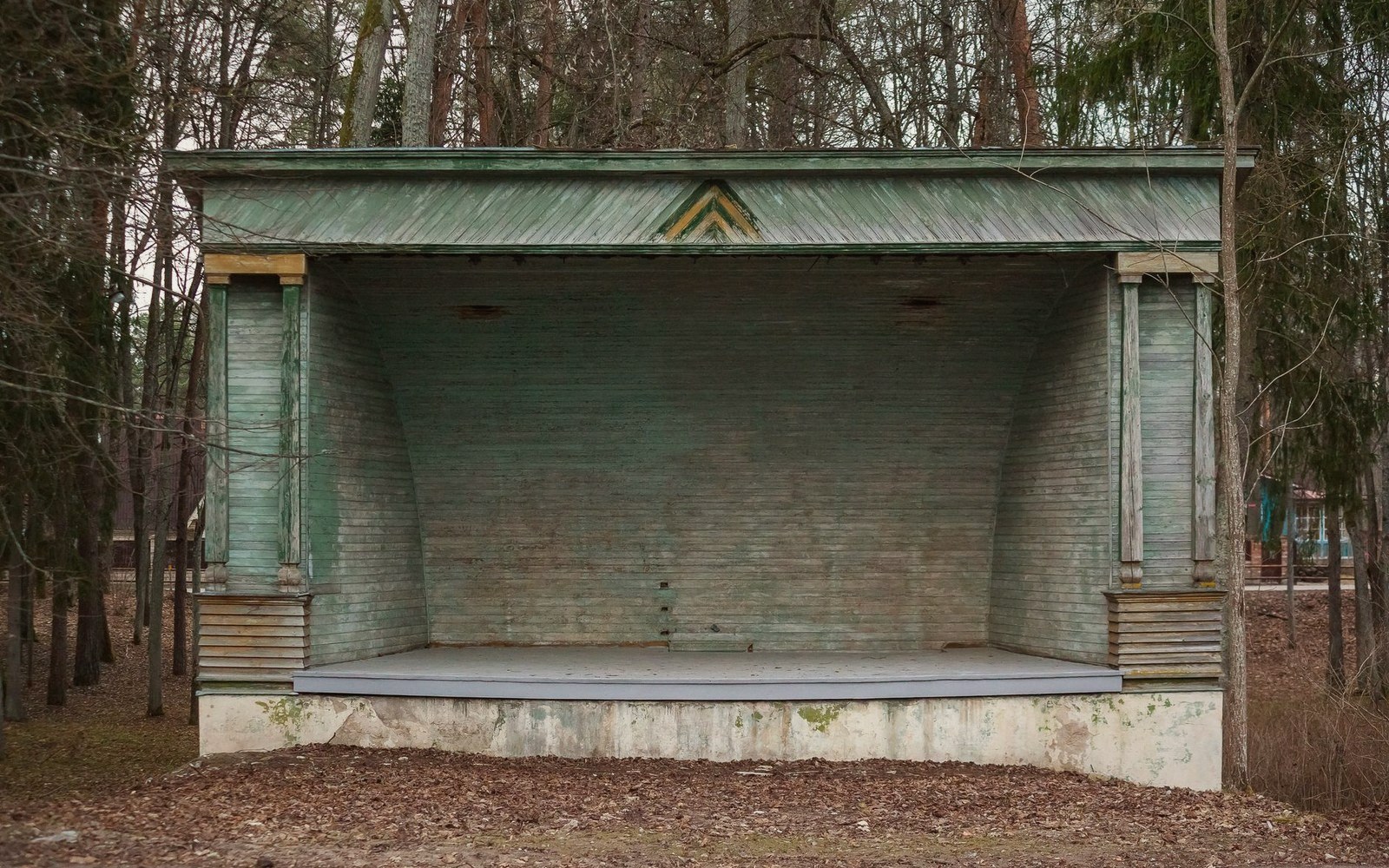
A wall is not scenery
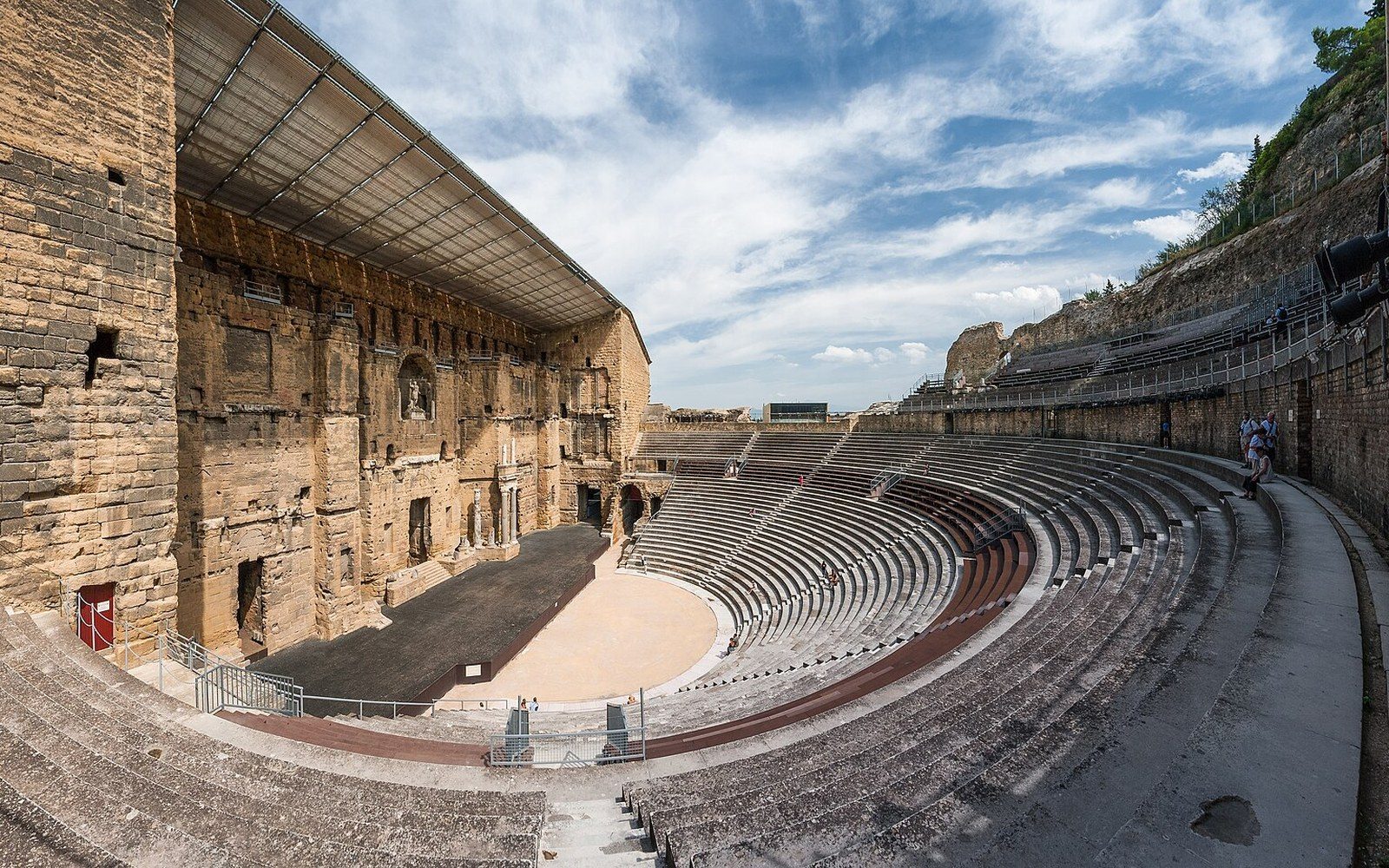
The scaenae frons — the formal stage wall of a Roman theatre — looks, at first glance, like architecture for show. At Orange, the wall runs a hundred and three metres wide and rises to roughly thirty-seven metres: a cliff of dressed stone dressed further with columns, niches and carved ornament.
It seems to belong to the vocabulary of imperial display, which it partly does. But behind that civic grandeur is an acoustic instrument, and the instrument works whether anyone intended it or not.
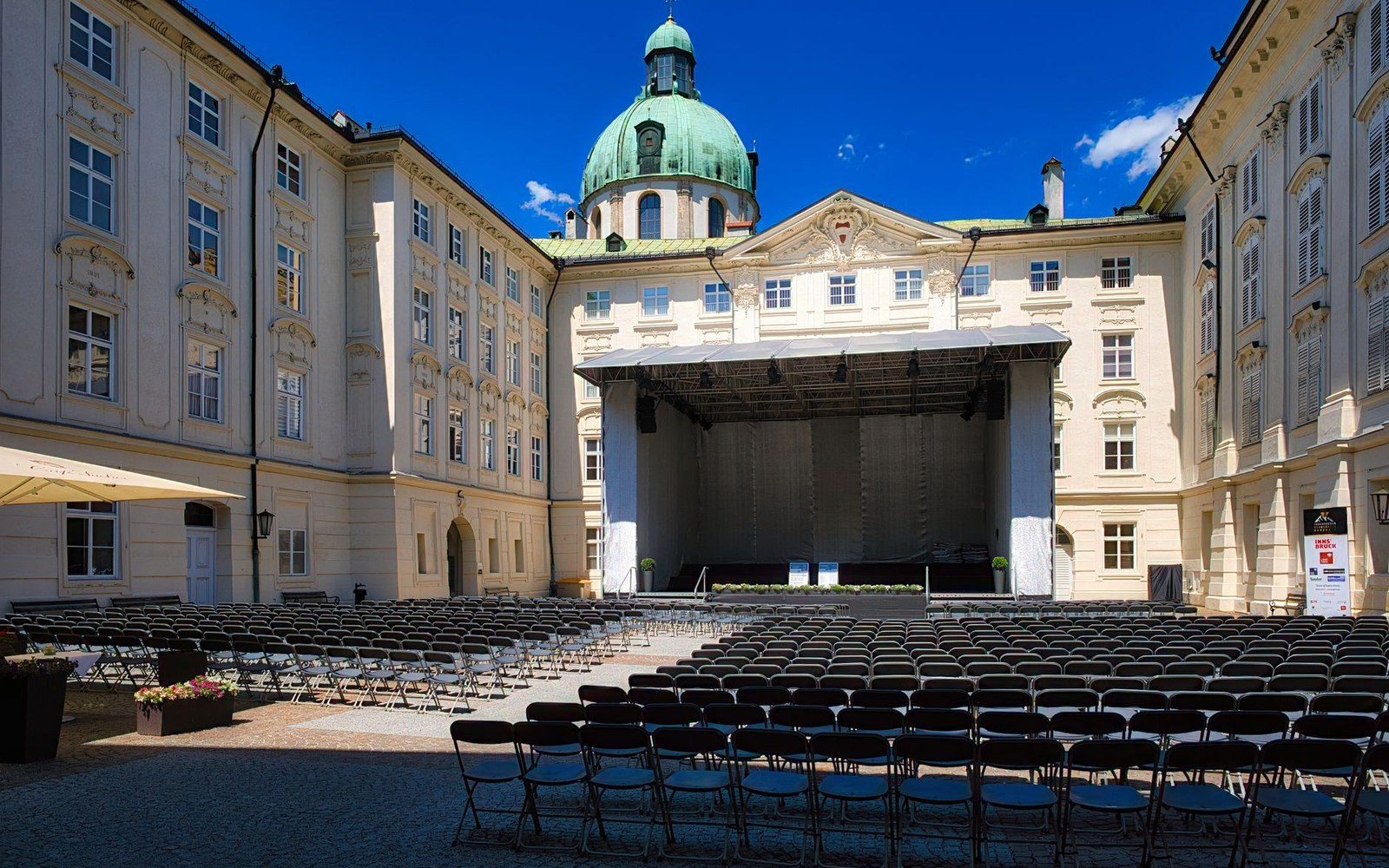
A Roman theatre is built on a geometric principle: the seating bowl (the cavea) faces a stage floor, and directly behind the stage floor stands a hard, continuous, vertical surface. The wall is a continuous surface, pierced only by a few doorways. Its function is to catch whatever the performer throws at it and send it back.
Sound leaving a speaker's mouth radiates in all directions. In an enclosed room some of that energy reaches the listener directly; the rest strikes surfaces and returns as reflections. What matters is timing.
Reflections arriving within roughly thirty milliseconds of the direct sound are not heard as separate events — the ear fuses them with the original signal, and the perceived result is a louder, fuller, more present voice. These are early reflections: the acoustic foundation of intelligibility outdoors. A field with no wall at all simply lets that energy disperse. A wall close behind the performer intercepts it and redirects it toward the audience.
Geometry, not magic
The scaenae frons earns its keep through geometry. A wall directly behind a standing performer is roughly at the right distance to return reflections within the critical window. At Orange, the stage-to-wall distance puts those reflections into the useful zone for much of the seating bowl — close enough to reinforce, far enough back to avoid a flutter.
The wall is also tall, which matters: a low barrier catches only the sound aimed roughly horizontally, while a tall wall intercepts sound angled upward as well, redirecting energy into the bowl rather than over the top of the audience.
The surface itself helps. Roman stone is irregular at the micro-scale — coursed masonry is not a precision acoustic panel — and that roughness scatters rather than focusses the return.
How the wall works — key terms
- scaenae frons
- the continuous stone stage wall behind the performer in a Roman theatre; the primary acoustic reflector
- cavea
- the semicircular seating bowl that faces the frons
- parascaenia
- the projecting side wings that extend the enclosure at the flanks
- early reflection
- a return arriving within roughly 30 milliseconds of the direct sound; fused by the ear with the original, making it louder and clearer
- diffusion
- scattering of reflected energy across the bowl, as opposed to focussing it into a single zone
Scattering spreads energy across the seating rather than producing a single bright zone. A perfectly smooth wall of the same dimension would create a harder, more uneven result. The centuries of weathering at Orange have, accidentally or not, made stone as a surface a reasonably good diffuser.
The wings of the theatre — the parascaenia, the side walls — reinforce the same principle from the flanks. Sound that escapes past the edge of the stage wall is partly caught by the returning side walls, which together with the cavea create a partial enclosure. This is not a box; it is a cupped hand, and the scaenae frons is the palm.
What the frons cannot do
A wall returns what a voice gives it. A whisper aimed at the orchestra will return almost nothing useful. The Roman theatrical tradition relied on trained projection — actors were practised in filling the bowl — but the wall was the enabling condition, not the supplement. Without it, the same voice in the same open landscape loses its projection almost immediately.
Amplified performance at these sites today uses the frons differently. Modern reinforcement systems deliver signal to the audience, but the wall remains acoustically active: it returns delayed copies of that signal and can create comb-filtering problems if the system's delay compensation is not calibrated to match the wall's return path.
Sound engineers working the wall at Orange for the Chorégies d'Orange — the lyric festival held in the Théâtre Antique, in the commune of Orange, Vaucluse — treat the wall as a variable in their system model, not a backdrop. A line array flown near the frons will have a shorter reflection problem than one positioned further downstage.
A perfectly smooth wall of the same dimension would create a harder, more uneven result.
Which is to say: the wall keeps asserting its physics regardless of what century the production belongs to. The Roman engineers who fixed the scaenae frons behind the stage did not write down an acoustic intention, but the geometry they produced continues to organise sound in that bowl every summer. It is not a monument that happens to host performances. It is a performance machine that also looks like a monument.
Numbers worth pulling out
- 103 metres
- width of the stage wall at Orange (Vaucluse)
- ~37 metres
- height of the same wall
- 30 milliseconds
- the approximate threshold within which reflected sound fuses with the direct signal rather than being heard as an echo