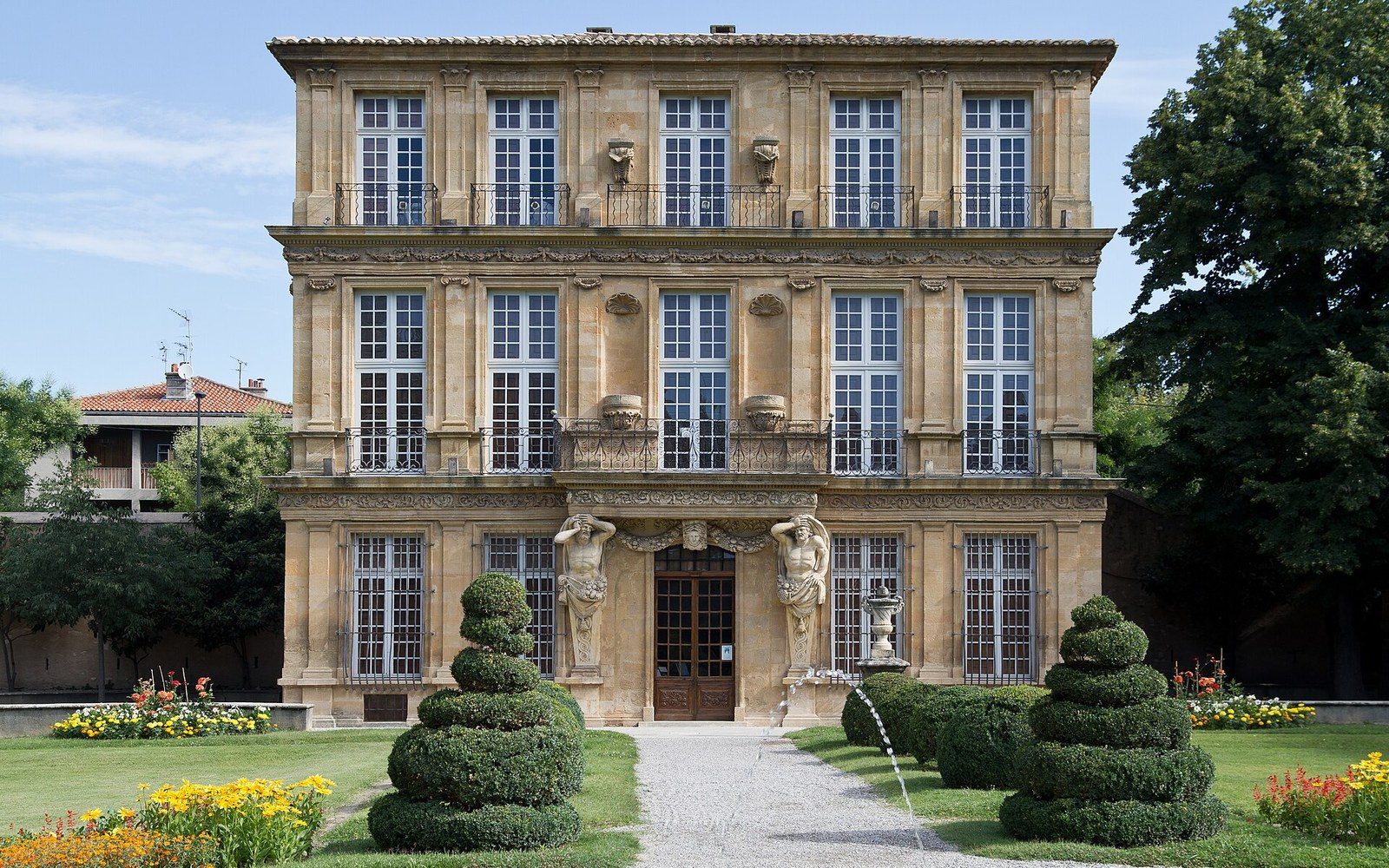
A courtyard that sets its own limits
Gabriel Dussurget chose the Cour de l'Archevêché in Aix-en-Provence in 1948, and the space chose back. The Archbishop's courtyard at the rear of the Palais de l'Archevêché — a modest rectangle of dressed stone on the south side of the cathedral of Saint-Sauveur — is not a large room. Its proportions are those of a ceremonial antechamber rather than a public theatre, and everything that has happened there musically follows from that fact.
Dussurget, who founded the Festival d'Aix-en-Provence, was not looking for grandeur. He was looking for a space that would suit Mozart — specifically the chamber-scaled operas, the ones that breathe rather than bellow.
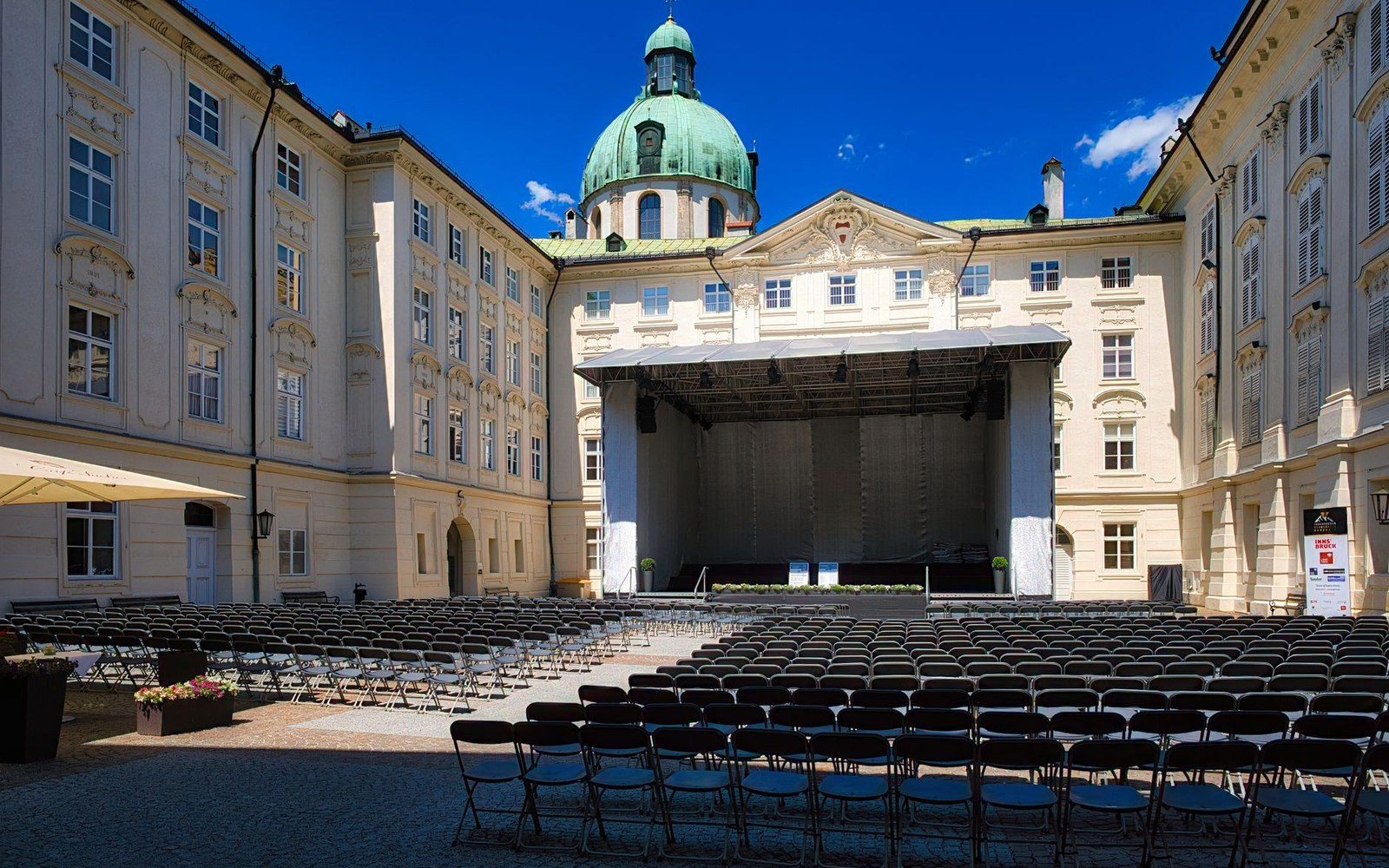
The Cour de l'Archevêché, roughly forty metres across at its widest, gave him a hard perimeter of stone on all four sides, an open sky above, and an intimacy that a larger venue would have destroyed. The decision was architectural before it was aesthetic: the room was the programme.
What the walls do
Four hard surfaces in an open courtyard behave in a specific way. Sound leaves the performer, strikes the stone, and returns to the audience quickly enough that the ear fuses the reflection with the direct signal rather than hearing it as a distinct echo. This early return is what a vertical stone wall does best — it reinforces without smearing.
In the Cour de l'Archevêché, the closeness of the walls means that even a small orchestra fills the space without effort. A large orchestra, conversely, is punished: the reflections from competing sections arrive out of phase, the bass frequencies build up in the corners, and the sense of clarity that makes the courtyard so compelling for a dozen strings collapses into congestion.
This is not a correctable problem with a better sound engineer. It is the geometry. The courtyard has a reverberation time — the duration for which sound persists after the source stops — that suits a small, precise ensemble.
A chamber orchestra playing Mozart can exploit the warmth without fighting the blur. A full symphonic ensemble cannot. Dussurget understood this intuitively; the festival's early programming, centred on Mozart's operas with relatively lean forces, was as much an acoustic calculation as an artistic one.
The constraint as identity
What makes the Cour de l'Archevêché worth examining as a built form is that its limitations became its signature. The courtyard did not limit what Aix could programme — it defined what Aix was.
A festival that might have sprawled into grander venues instead built its identity around the intimacy that one specific enclosure demanded. Other courtyards were pressed into service as the festival grew, and the main stage eventually expanded, but the Archevêché remained the room that set the tone: small forces, clean textures, an audience close enough to hear breath and bow.
The stone itself is part of the acoustic character. Cut limestone is hard and irregular at the surface — not perfectly flat, not perfectly parallel between facing walls — which means that reflections scatter rather than repeat as a clean flutter echo.
A perfectly smooth rectangular box would be far worse; the slight unevenness of historical masonry does the work that a contemporary acoustic consultant would achieve with diffuser panels. The material solves a problem it never knew it had.
Access and production logistics have always been constrained by the courtyard's age and its protected status as a historic monument. Nothing can be fixed to the walls without conservation approval; rigging must be entirely self-supporting; load-in passes through gates designed for foot traffic and clergy, not for flight cases. The production that arrives in Aix works with the space in the most literal sense — accommodating the room, not overcoming it.
What Dussurget found in 1948 was a courtyard that could not be made neutral. It had a character, and that character demanded a specific kind of music-making: restrained, clear, close.
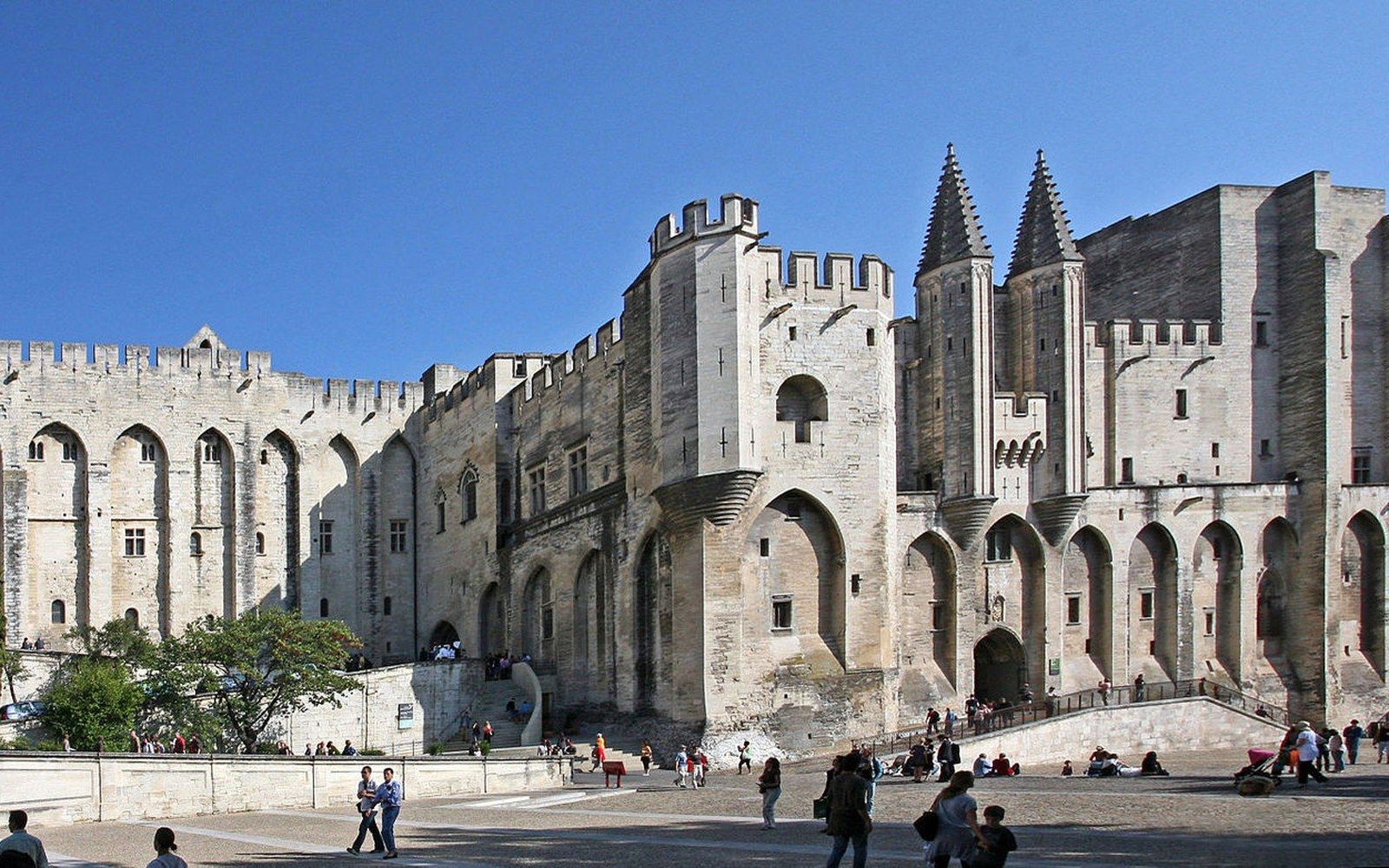
Festivals that choose character over flexibility often find that the constraint outlasts the founder's intentions and becomes the institution's deepest argument for its own existence. The Cour de l'Archevêché is a room that has been making that argument, in stone, for more than seventy years.
The courtyard did not limit what Aix could programme — it defined what Aix was.