A wind that programs festivals
The mistral — the cold, dry, northerly that pours down the Rhône valley — is not local colour. At Orange, Avignon, and Vaison-la-Romaine in the Vaucluse, it is an operational constraint that shapes every decision from stage orientation to performance length.
The mistral blows hardest in the spring and early summer, but it arrives without reliable schedule: a sustained run of thirty or forty kilometres per hour is enough to defeat an open-air mix position.
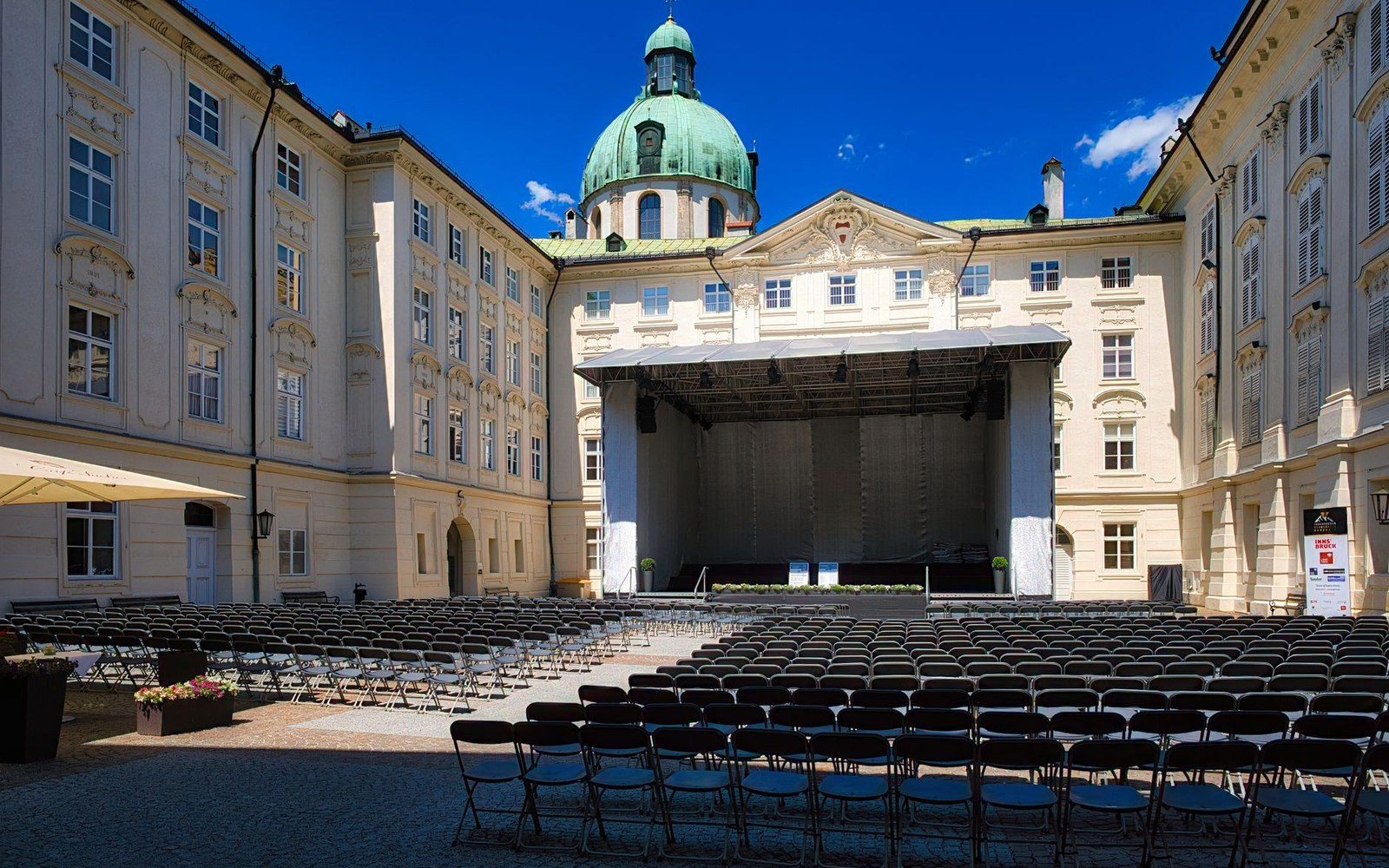
Sound engineers working the Théâtre Antique at Orange already work with a stage wall on one axis; when the mistral comes broadside, it bends the output of a line array sideways before it reaches the back rows. Delay towers can compensate for some of that drift, but they cannot correct for a gust that shifts mid-phrase.
At Avignon, the Cour d'honneur of the Palais des Papes sits partially shielded by its own mass, but the upper tiers of seating and the temporary roof structures over the stage are fully exposed. Rigging engineers calculate wind-load tolerances before every build; the numbers that govern a stay-cable on a flown grid in calm conditions are revised upward for Provence in July. That revision has a direct cost in steel and time.
Unroofed historic venues solve nothing structurally. The Roman theatre at Vaison-la-Romaine, in the Vaucluse, stands in a town struck by the Ouvèze flood of September 1992 — a different weather event, but a reminder that the landscape around these sites is not passive. Restoration work at the site is conducted under conservation rules strict enough to prevent the kind of heavy fixing that might anchor a wind-resistant fly-tower permanently.
Acoustic and engineering vocabulary
- mistral
- the cold, dry northerly channelled down the Rhône valley; a consistent operational hazard in Provence
- line array
- a column of loudspeaker elements whose output can be directed but not corrected for lateral wind drift
- delay tower
- a secondary speaker cluster timed to the main system; partially mitigates wind-displaced sound but cannot track gusts
- wind-load tolerance
- the structural calculation governing how much lateral force a rigged element can sustain before its fixing fails
- soft goods
- fabric elements in a stage set (drapes, backdrops) that behave as sails in wind; typically flown short or struck early
The production response is pragmatic: lighter set elements, shorter vertical runs on soft goods, cues held until a lull. Experienced festival crews in the region treat the mistral the way crews elsewhere treat curfew — as a hard parameter that the show is designed around, not a surprise to manage on the night.
The result, invisibly, is that the wind has already moved through the programme before the audience arrives.
The production response is pragmatic: lighter set elements, shorter vertical runs on soft goods, cues held until a lull.