When the sky is the ceiling
A courtyard is not, acoustically, a room — and that is precisely what makes it interesting.
Four hard walls return lateral reflections to anyone standing in the centre. Stone or rendered plaster bounces high-frequency energy cleanly; if the surfaces are non-parallel, as many old courtyards are, the reflections scatter rather than stack into flutter echo.
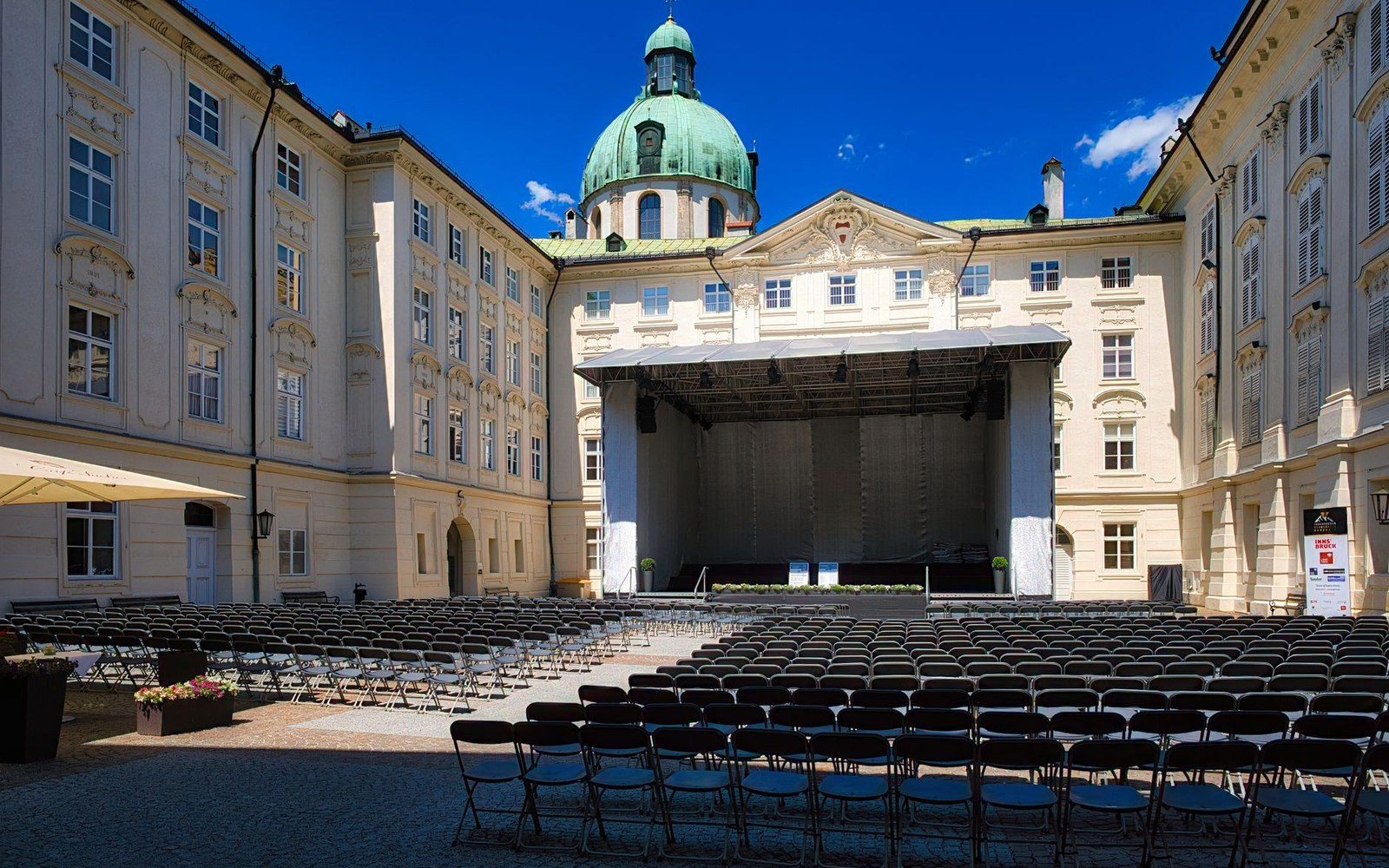
The result is a live, coloured sound that an interior of the same dimensions would not produce, because an interior's ceiling adds a third axis of reflection and holds the reverberant field in place.
Open sky removes that ceiling, and with it the reverberation time shrinks toward zero as the decay path escapes upward. What remains is a dense cluster of early reflections — the first arrivals back from the walls — without the long tail that gives a stone church its wash. The ear hears the direct sound, then the walls, then relative silence. Dry and immediate, but not dead.
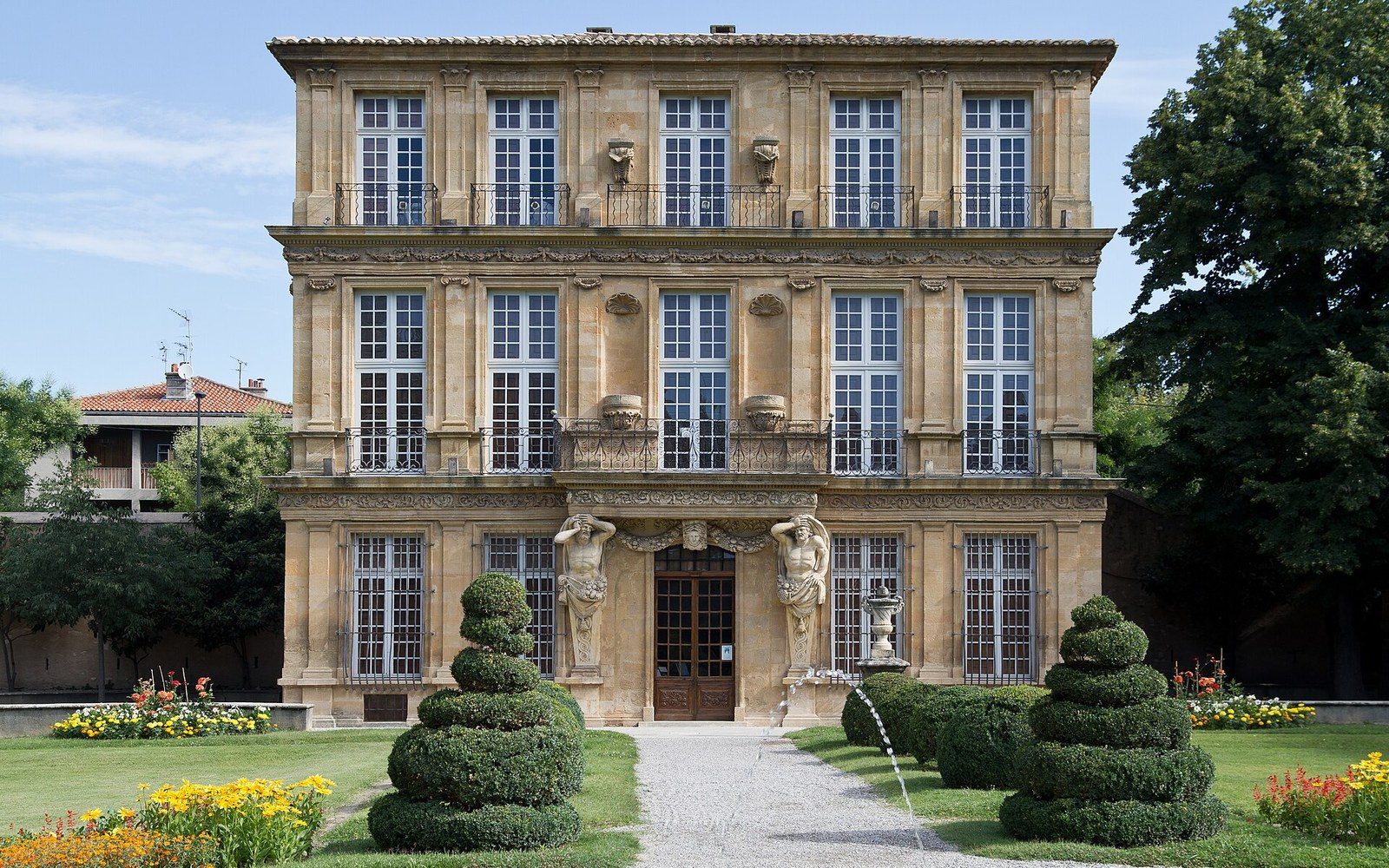
The Cour de l'Archevêché at Aix-en-Provence, chosen by Gabriel Dussurget in 1948, is a textbook case. Its walls are close enough to the stage that early reflections reach the audience in well under thirty milliseconds — within the Haas window, where the brain fuses them with the direct sound and hears a louder, fuller source rather than a distinct echo.
Chamber opera benefits: voices carry, the orchestra fills the space without a pit, and the absence of a long reverberant tail keeps fast passage-work clean.
What courts of this kind cannot do is sustain a sound. A long choral chord, released, dies quickly. A large symphony orchestra fills the reflective budget early and then struggles for warmth. These are rooms that suit dry genres: opera, chamber music, theatre — repertoire where articulation matters more than bloom.
Acoustic terms
- reverberation time
- how long it takes sound energy in a room to decay by 60 dB after the source stops; effectively absent in an open courtyard
- early reflection
- a reflection arriving within roughly 30 milliseconds of the direct sound; fused with it by the listener
- Haas window
- the time interval (up to roughly 30–35 ms) within which the brain treats a reflection as part of the original sound, not a separate echo
- flutter echo
- rapid repetition caused by parallel, hard, reflective surfaces facing each other; scattered by non-parallel walls
The box, in other words, is not a neutral container. Its proportions, surface hardness and missing ceiling are a set of acoustic commitments made, usually, by whoever built the building for entirely other reasons.