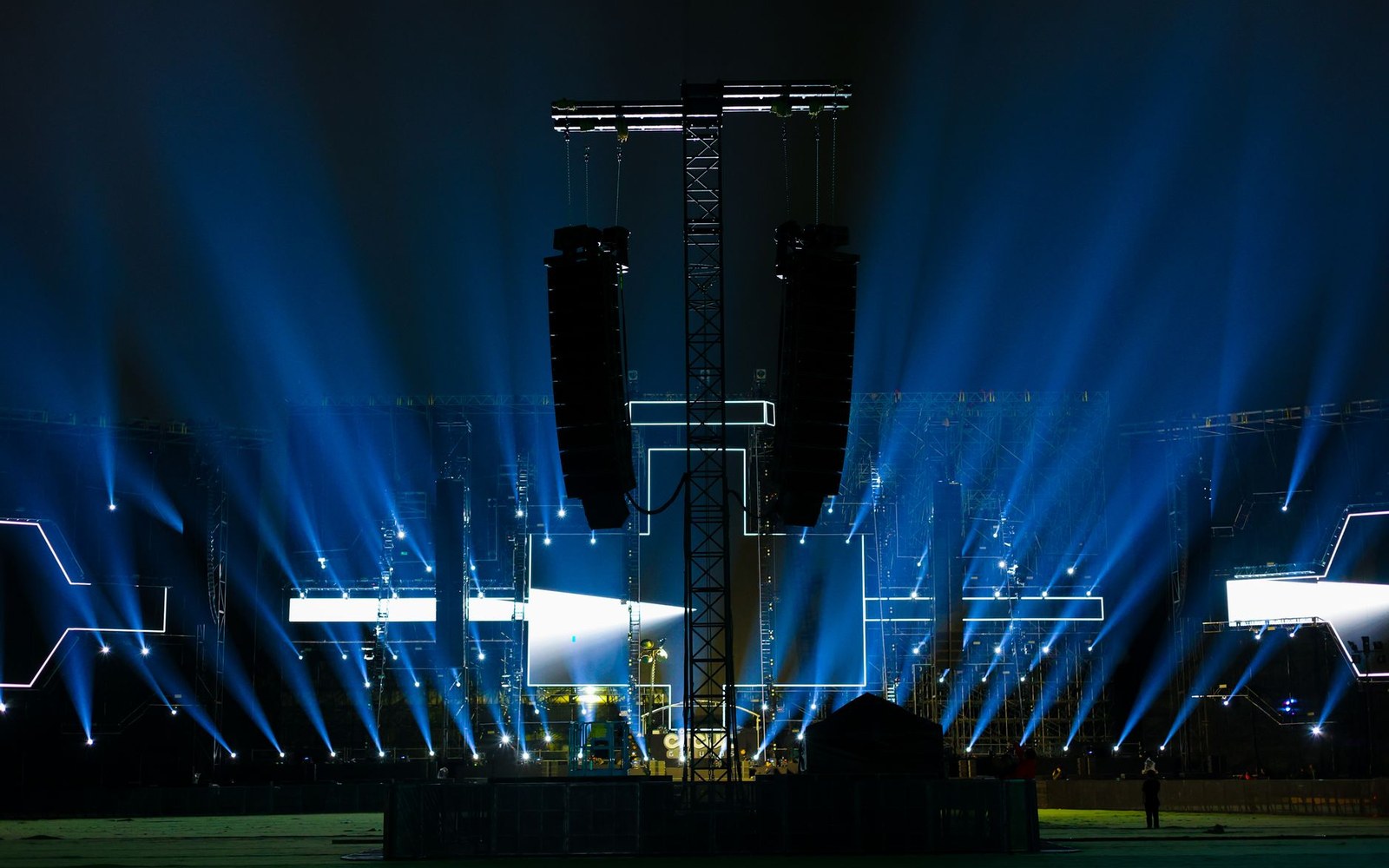
Sound moves slower than light, and a field is longer than you think
The speed of sound in air — roughly 343 metres per second at room temperature — is not an abstraction for a festival sound engineer. It is a hard constraint that shapes every large outdoor site.
When a single cluster of loudspeakers fires from a stage, the sound that reaches someone standing two hundred metres back arrives later than the sound that reaches the first ten rows. For a short distance, the difference is small enough to ignore. For anything approaching festival scale, it is not.
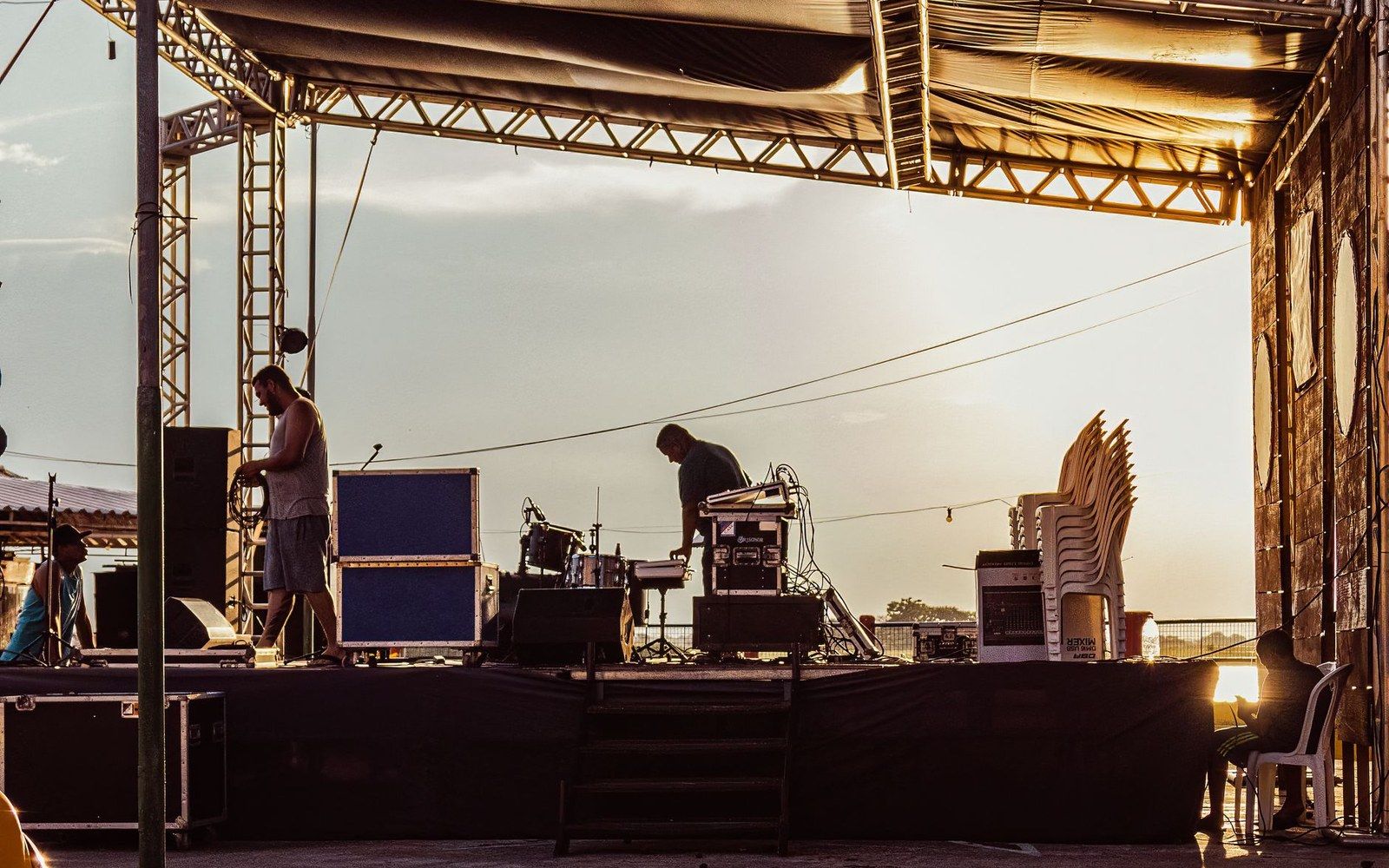
A listener standing a hundred metres from the stage hears sound from the main hang roughly 290 milliseconds after it leaves the drivers. The performers on stage are visible in real time.
The result, past a certain distance, is not just quieter sound but a disturbing temporal mismatch — the eye and the ear disagree. Engineers call the general problem propagation delay, and the solution is not simply to turn up the main system.
More level at the source pushes the near field into discomfort while still failing the back of the field. The answer is to put additional loudspeakers into the field itself, positioned so their output arrives at local ears in alignment with the main system — with a deliberate offset applied so that the brain reads the combined sound as a single event coming from the stage.
What a delay tower actually does
A delay tower is a freestanding structure carrying a loudspeaker array, planted in the middle ground of a site — say, eighty or a hundred metres from the stage. The speakers it carries are given an electronic delay: the signal is held back by a value calculated from the distance between that tower and the main hang.
The goal is that sound from the tower arrives at the listener fractionally after sound from the main system, in a window of around ten to thirty milliseconds. Within that window, the auditory system fuses the two arrivals into a single perceived source and attributes it to whichever arrival came first — which is the main hang, correctly, at the stage.
This is sometimes called the Haas effect, after the Dutch acoustician Helmut Haas who described it in work published around 1951. In practice it means the back of a deep field hears adequate level and correct intelligibility without a confusing echo, while the natural direction cue toward the stage is preserved.
How the physics works
- propagation delay
- the time sound takes to travel from source to listener, roughly 1 millisecond per 34 centimetres
- Haas effect
- within roughly 10–30 ms, the auditory system fuses two arrivals into one and attributes direction to whichever came first
- line array
- a vertical stack of coupled loudspeaker modules producing a long, controlled wavefront with narrow vertical dispersion
- delay tower
- a freestanding mid-field structure carrying a line array with an electronic time offset matched to its distance from the main hang
Without it, a large field becomes a series of zones — loud, quieter, loud again near a delay position — with uneven coverage and no consistent experience.
The hardware on the tower is almost always a line array — a vertical stack of loudspeaker modules whose narrow vertical dispersion controls where the sound goes. Each module couples with its neighbours to form a long, coherent wavefront.
The result is an array that projects sound a long distance horizontally while shedding very little energy upward into empty air or downward into the ground too early. The practical value of this in an open field is that engineers can aim the array's coverage zone with precision, setting the throw to cover the listeners between the tower and the next system position, without washing over adjacent zones.
The field as a chain
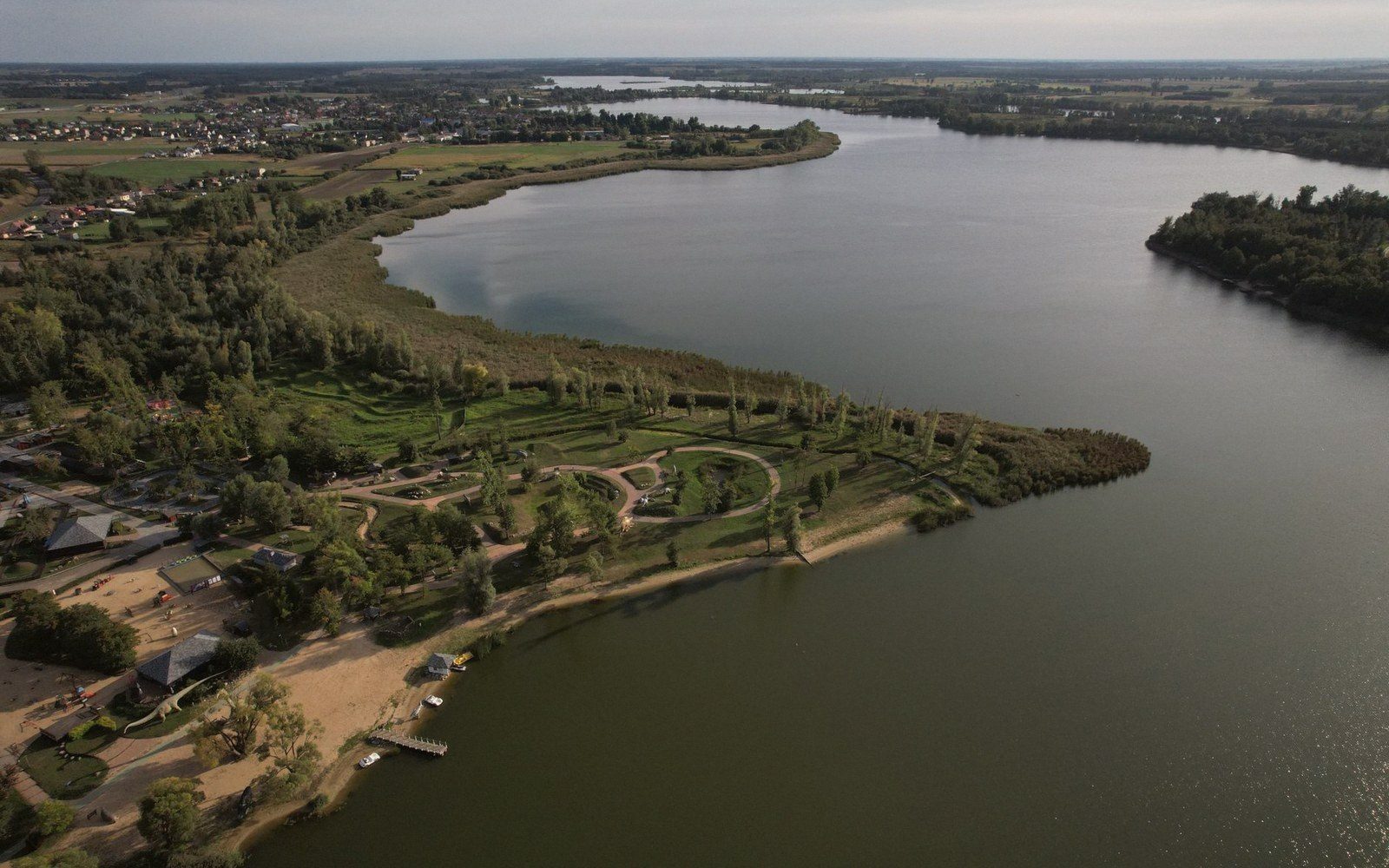
A very large festival site may require more than one set of delays. The main hang covers the front zone; a first ring of towers covers the middle ground; a second ring — themselves delayed relative to the first — covers the far field.
Each link in the chain carries its own calculated offset, accumulating the propagation distance from the original source. The system is only as coherent as its time-alignment, which is why a dedicated system-engineer role exists on any serious outdoor show. The calculations are straightforward but the verification requires measurement, typically with a measurement microphone and audio analysis software that shows arrival times across the field.
Open-air conditions introduce additional variables that a fixed indoor room does not. Temperature changes through the day shift the speed of sound slightly, and the mistral or any strong wind alters effective propagation speed along and against its direction.
Without it, a large field becomes a series of zones — loud, quieter, loud again near a delay position — with uneven coverage and no consistent experience.
A system set up in cool morning air is not quite the same system by mid-afternoon. Engineers account for this by budgeting time for in-field measurement checks before an event begins rather than relying on the previous night's figures.
The system chain
- Main hang at the stage
- covers the near field
- First delay ring
- positioned roughly 80–120 m out, delayed relative to the main hang
- Second delay ring (on large sites)
- delayed relative to the first ring, not the stage
- Each position requires its own measured time offset, verified with in-field measurement before the event
The field is the room, and delay towers are the shape the engineers give to time.