A peninsula that offers nothing back
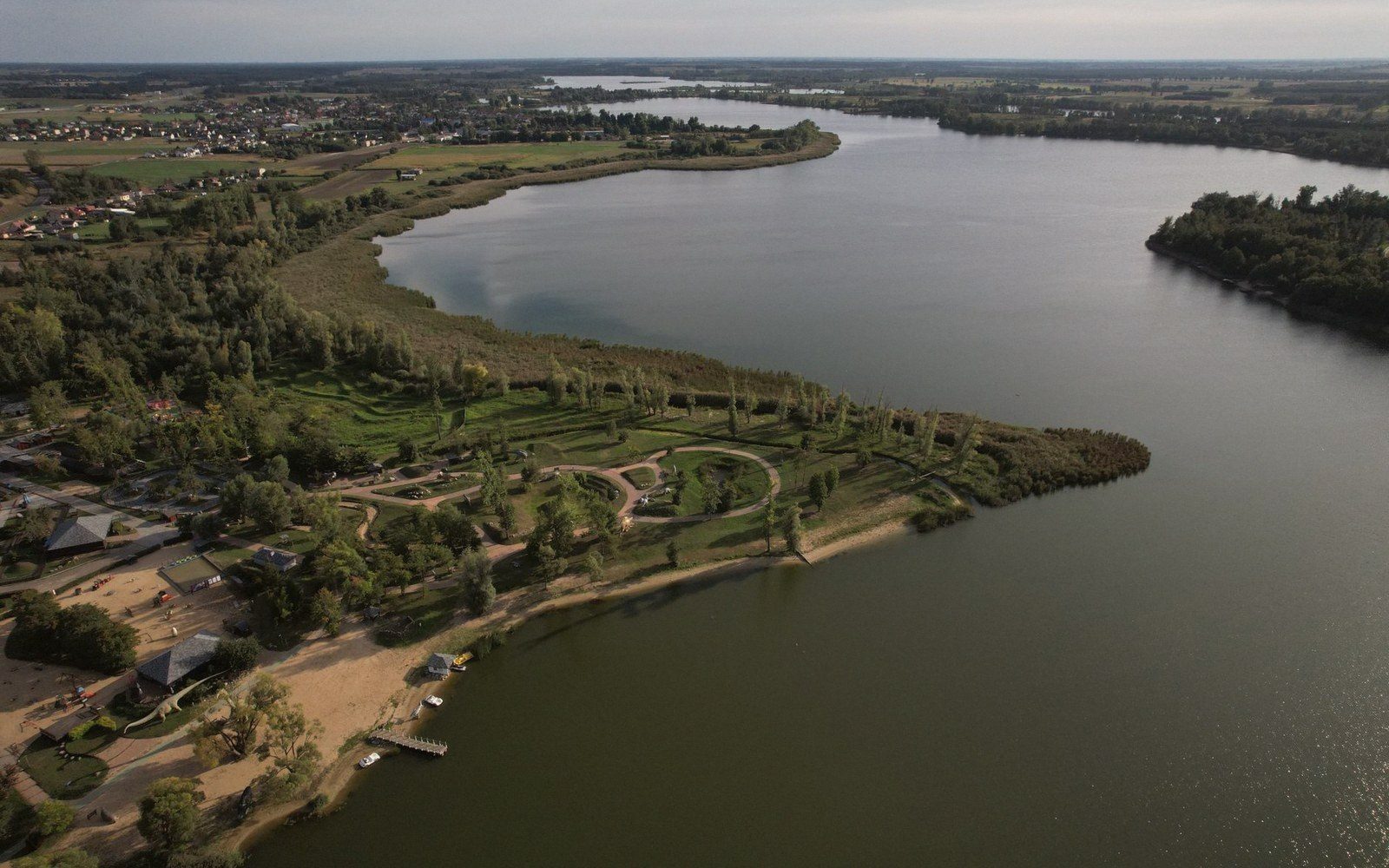
The site near Belfort, in the Territoire de Belfort, is a presqu'île — a near-island, surrounded on three sides by the Lac du Malsaucy.
Les Eurockéennes has staged rock and electronic music there since 1989, and the choice of location reads, at first, as purely scenic: water on three sides, hills behind, sky above. What it does not read as, until you start thinking about sound, is a problem. But a problem is exactly what it is.
Every hard-surface venue in this guide — the Roman theatre at Orange, the courtyard at Aix, the worked quarry faces near Boulbon — gives a sound engineer something to work with before the power goes on. Stone, brick and cut rock return early reflections to the audience.
A performer stands in front of a wall and the wall acts. At Malsaucy, there is no wall. Water does not reflect sound usefully across the distances involved; grass absorbs rather than returns; open sky offers nothing. The acoustic environment before amplification is, effectively, zero. The entire sound field has to be constructed.
The acoustic problem in plain terms
- presqu'île (near-island)
- a peninsula with water on three sides, no hard surfaces to return sound
- line array
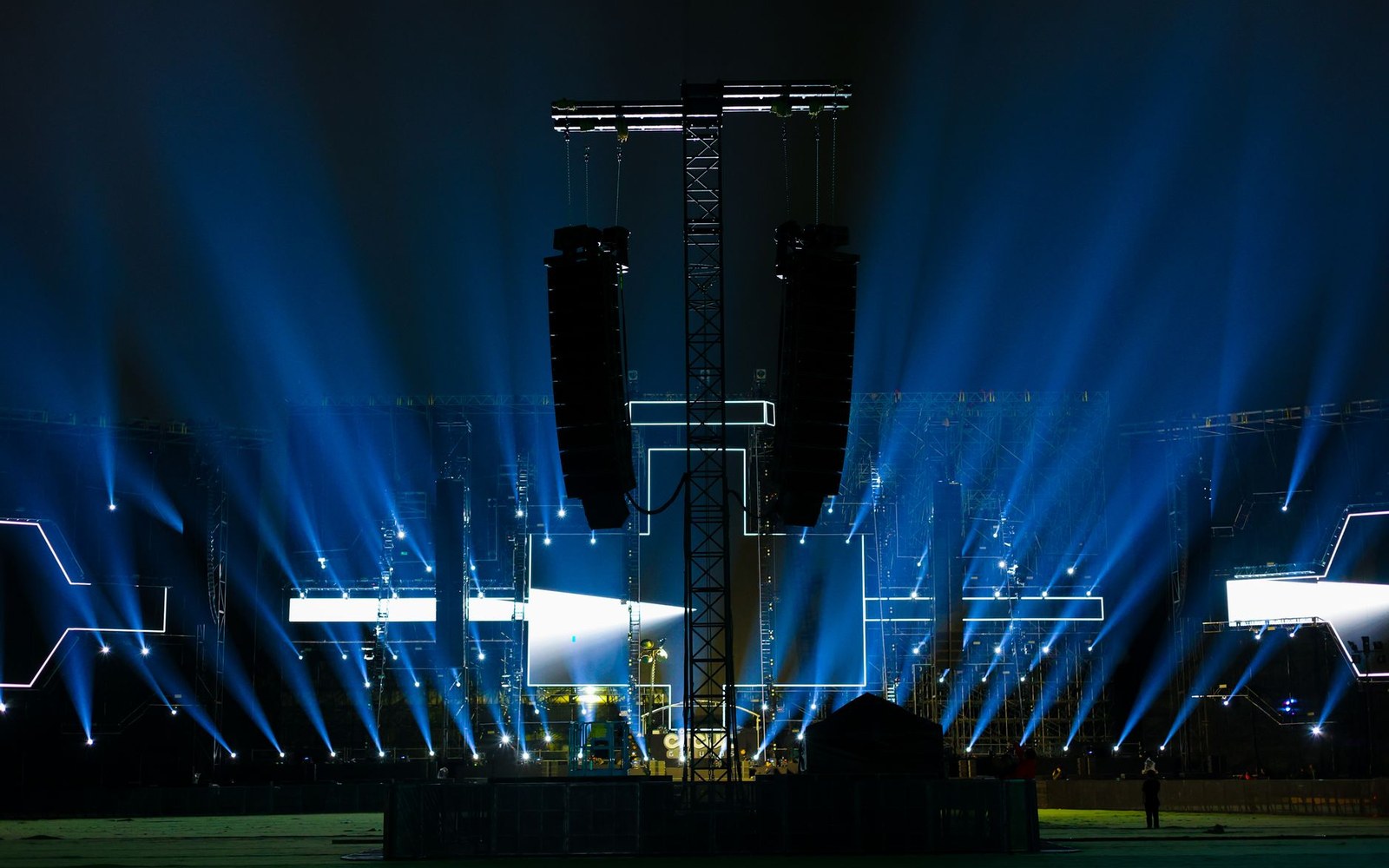
- large-format speaker stack projecting a shaped wavefront across an open field
- delay tower
- mid-field speaker fed a time-delayed signal to reinforce coverage at distance without doubling the front image
- get-out
- the overnight strike and load-out, constrained here by a single access road
Building the room from the rig
That construction is the job of the system technicians and the crew who deploy the line arrays — large-format speaker stacks that project a controlled, curved wavefront across the crowd. On a soft open field, there are no competing reflections to fight, which sounds like an advantage.
In practice, it removes every natural cue an engineer would otherwise use to place sound in the space. Coverage must be calculated from scratch for each stage, with the geometry of the peninsula dictating where the front-of-house position sits and how far the signal must travel before it reaches the back of the field.
Distance is the primary variable. Sound travels at roughly 343 metres per second under standard conditions, and a large festival field can be several hundred metres deep. A signal arriving at the rear of the crowd without correction arrives late enough to blur against the image from the main hang.
Delay towers — secondary stacks placed mid-field, fed a time-delayed signal — compensate for this, reinforcing coverage at distance without doubling the front signal. The number, placement and delay values of those towers are calculated afresh for each stage configuration; nothing about the site provides a shortcut.
The lake also contributes a constraint that has nothing to do with acoustics. A peninsula means, by definition, one road on and one road off. Every truck carrying rigging, power distribution, barriers and production equipment arrives and departs through the same access point.
The get-out — the overnight strike at the close of the festival — is a sequencing exercise as much as a physical one, because a full lorry sitting at the neck of the peninsula blocks everything behind it. Site managers at Malsaucy work to a load-in and load-out plan that treats the road itself as a resource to be scheduled.
Every truck carrying rigging, power distribution, barriers and production equipment arrives and departs through the same access point.
What the water does do
None of this means the site is indifferent to its landscape. The lake's presence suppresses one of the commonest noise-pollution problems at large outdoor events: the hard bounce of low frequencies off an urban perimeter.
At Malsaucy, bass energy that overshoots the main audience area dissipates across open water rather than rattling windows in surrounding streets. That characteristic shapes the site's relationship with its commune and its prefecture in ways a city-edge field never could.
There is also the visual fact of the water. Audiences on a peninsula are surrounded by the lake on three sides and oriented toward a stage with the treeline behind it.
Site and logistics
- Lac du Malsaucy
- the lake surrounding the peninsula on three sides; absorbs low-frequency overshoot, easing noise-pollution issues with the commune
- Belfort, Territoire de Belfort
- the commune and département in which the site sits
- Single road access
- one entry/exit point controls the sequencing of every truck movement during load-in and get-out
The frame is fixed and natural, which is more than most festival sites can claim. The engineers build the acoustic room from scratch every year, but the visual architecture was already there, cut from the landscape long before the first rig went up in 1989.