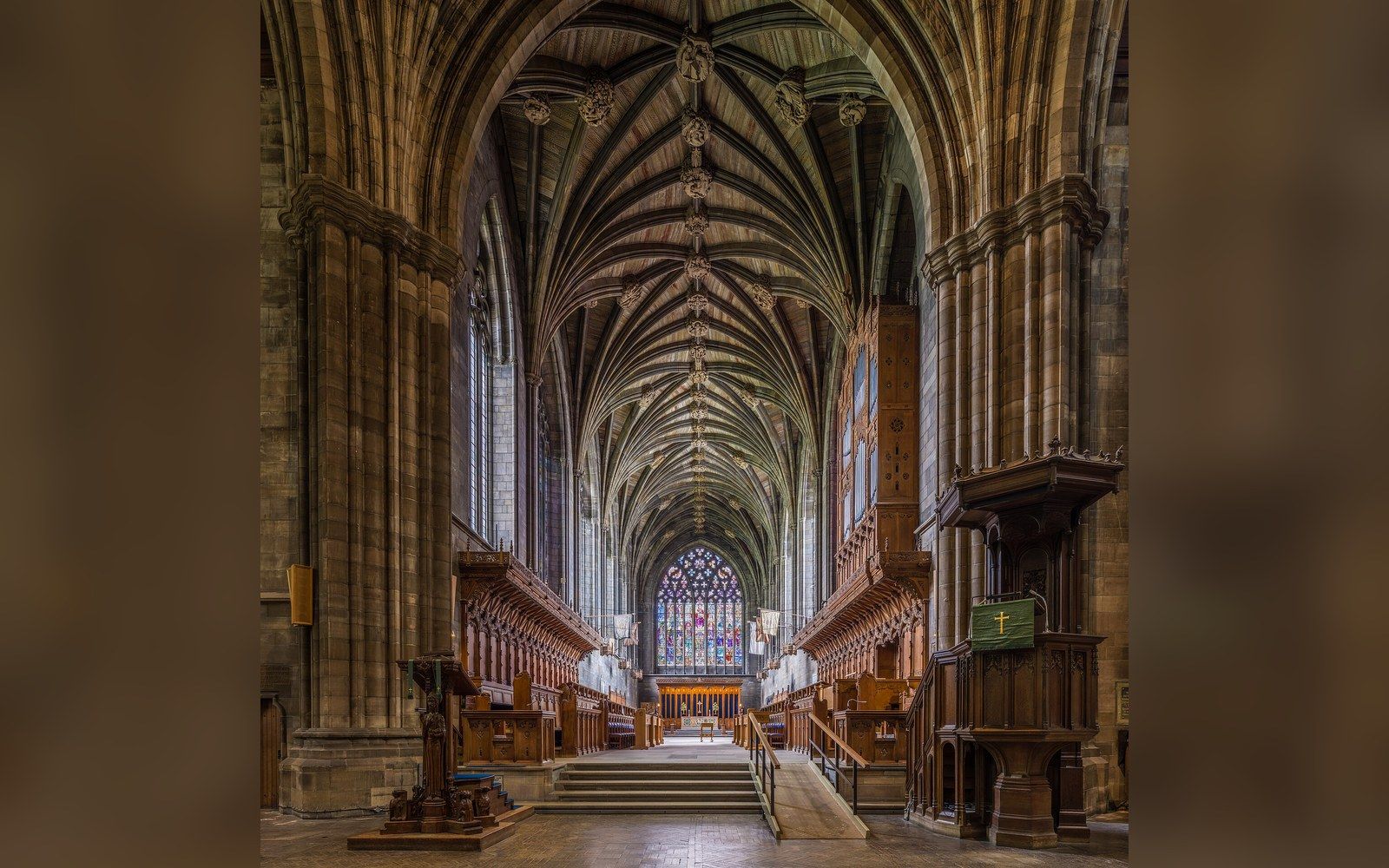
When the room was already an instrument
The acoustic of a Romanesque nave was not an accident. The builders calculated — intuitively rather than mathematically — for a single cantorial voice carrying to a congregation that could not read.
Stone barrel vaults, thick walls, parallel reflective surfaces: together they produce reverberation times that can exceed four seconds at middle frequencies in a large abbey church. One voice fills that space without effort. A string quartet in the same room is a different problem.
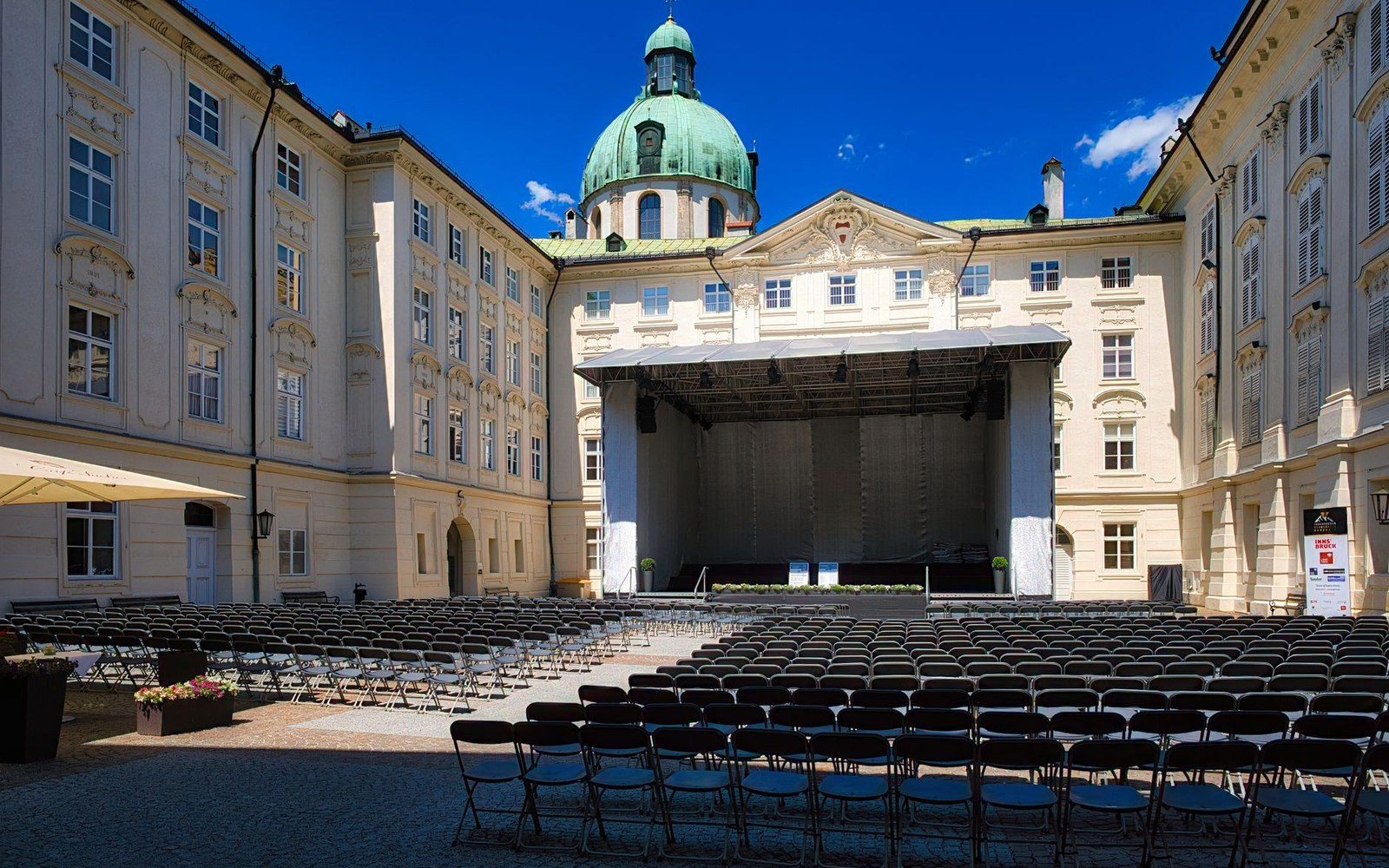
The difficulty is superposition. In a room with a long reverberation tail, every note a sustained ensemble plays sits underneath the next one; harmony thickens into mush unless the performers slow down and space their lines to let the room recover between them.
Early music ensembles, singing plainchant or Renaissance polyphony written with exactly this acoustic in mind, arrive at these venues almost optimally matched. A symphony orchestra does not. The room was never meant for it.
French festival programmers discovered this incompatibility and largely worked around it by curating the repertoire rather than treating the building. The major abbey venues — the cloisters of Saint-Trophime at Arles, the naves used for satellite events during the Festival d'Aix-en-Provence — tend to receive plainchant, solo recital, and chamber music. The building's own acoustic becomes the programming logic.
How the physics works
- reverberation time
- how long a sound takes to decay by 60 dB after the source stops; four seconds or more in a large Romanesque nave
- barrel vault
- a continuous arched stone ceiling that reflects sound back toward the floor rather than absorbing it
- superposition
- the layering of a sustained note's decay onto the next note, smearing harmonic definition in long-reverb rooms
What engineers sometimes do when a larger ensemble is unavoidable is hang heavy drape across the vault bays, which shortens reverberation time by killing the high-frequency energy. The room becomes drier, more controllable, and acoustically less interesting.
The alternative — accepting the space and writing for it — produces performances where the building is a collaborator rather than an obstacle, a premise that drew Gabriel Dussurget and others toward historic enclosed spaces in the first place.
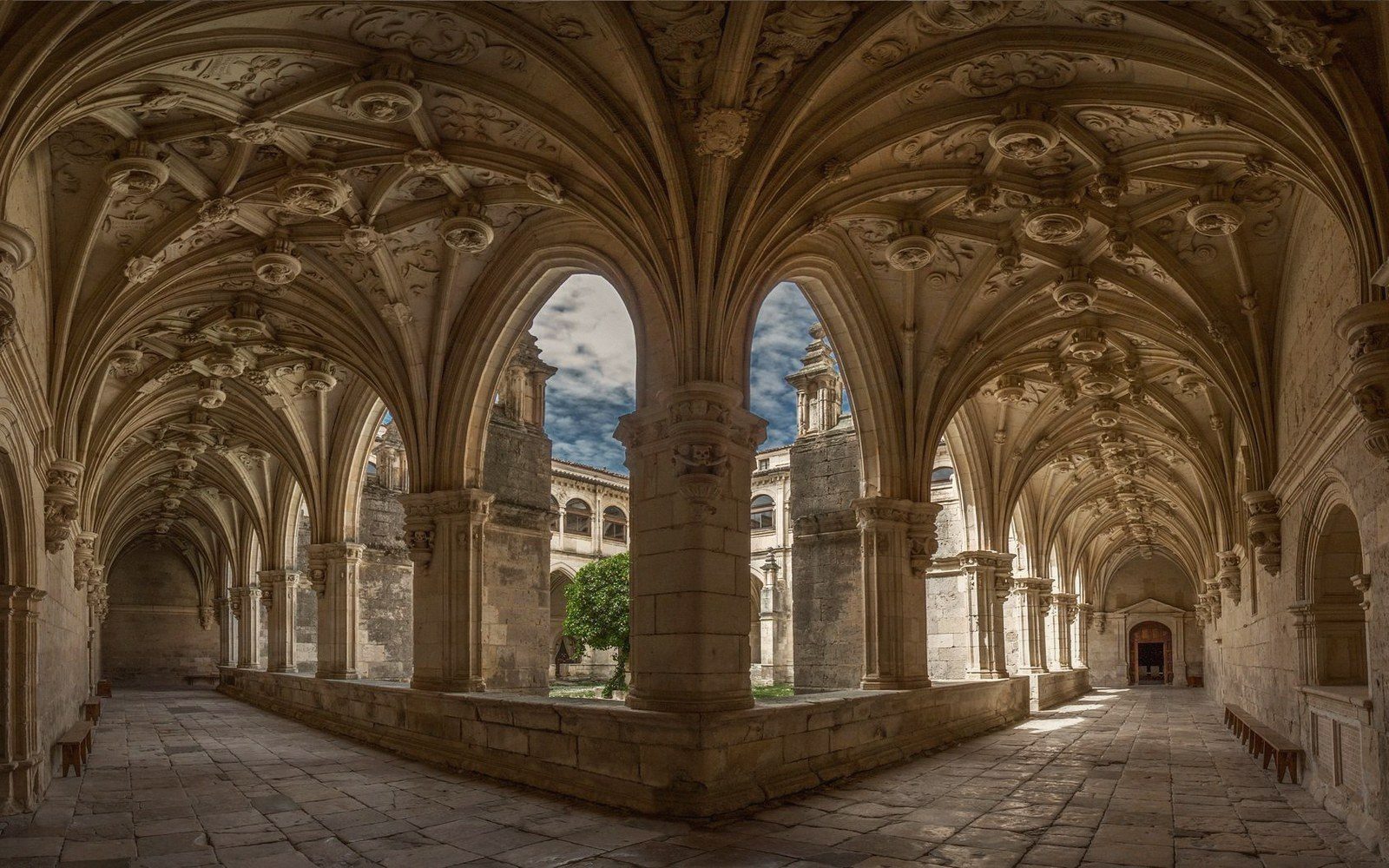
The nave is not a concert hall. It is a resolved volume with its own requirements, and the festivals that use it well are the ones that let the room choose the programme, not the other way round.
The room becomes drier, more controllable, and acoustically less interesting.